30%
average boost in admission odds from the right early strategy.
Building a balanced college list is one of the most important but underutilized parts of the college admissions process. College Kickstart uses real-time admissions data to help students and families build lists that are genuinely balanced, strategically sequenced, and grounded in reality.
average boost in admission odds from the right early strategy.
of users capitalize on appropriate early admission opportunities.
average early opportunities identified per list.
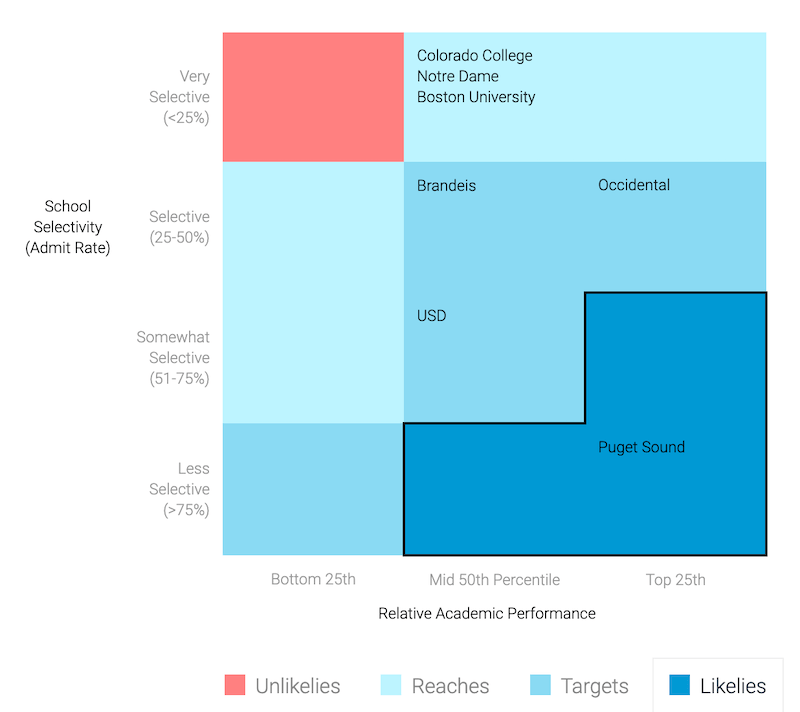
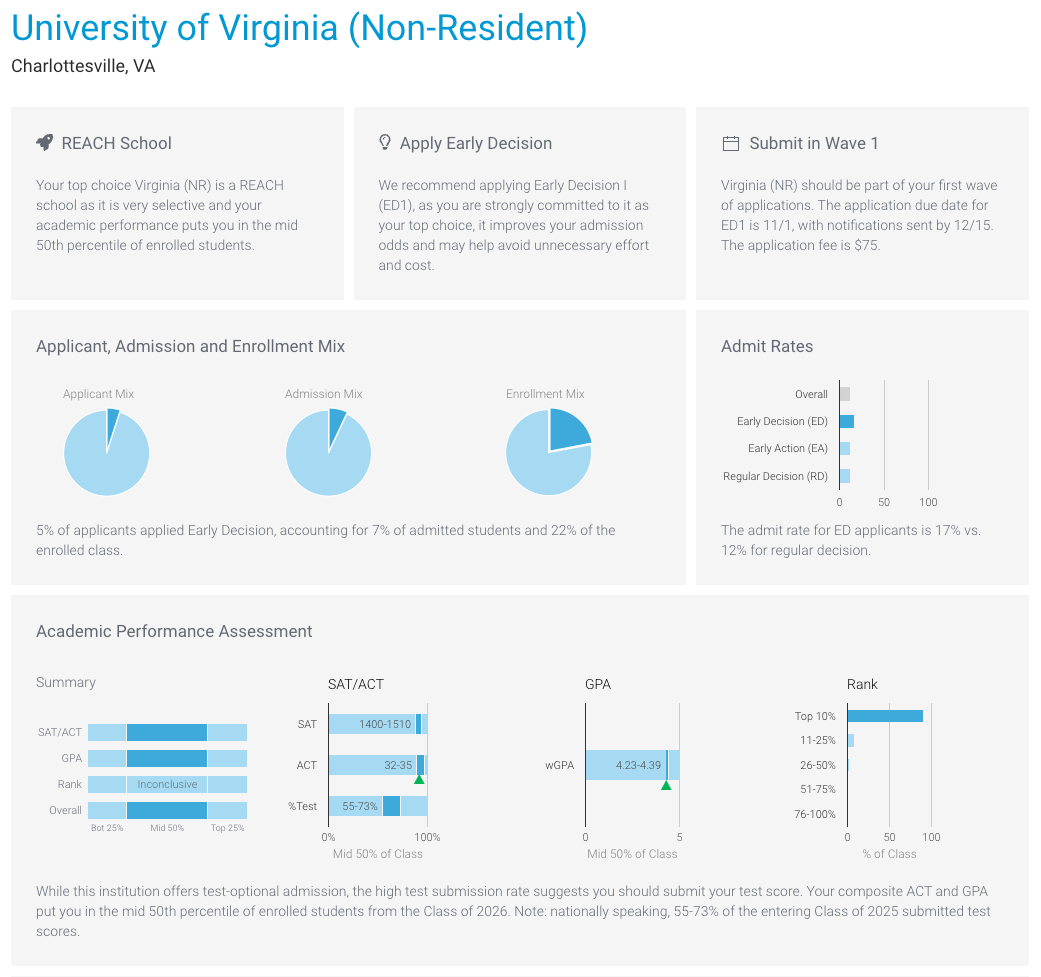
A balanced college list typically includes a mix of Likely, Target, Reach, and Long Shot schools, with each category determined by comparing a student's academic profile against actual admissions data from the previous year's admitted class, not just a school's overall reputation.
College Kickstart draws on admissions data from 790+ U.S. four-year institutions, including department-level acceptance rates covering 600+ departments across 80+ popular institutions such as Cornell, Tufts, Georgia Tech, UCLA, and the University of Virginia.
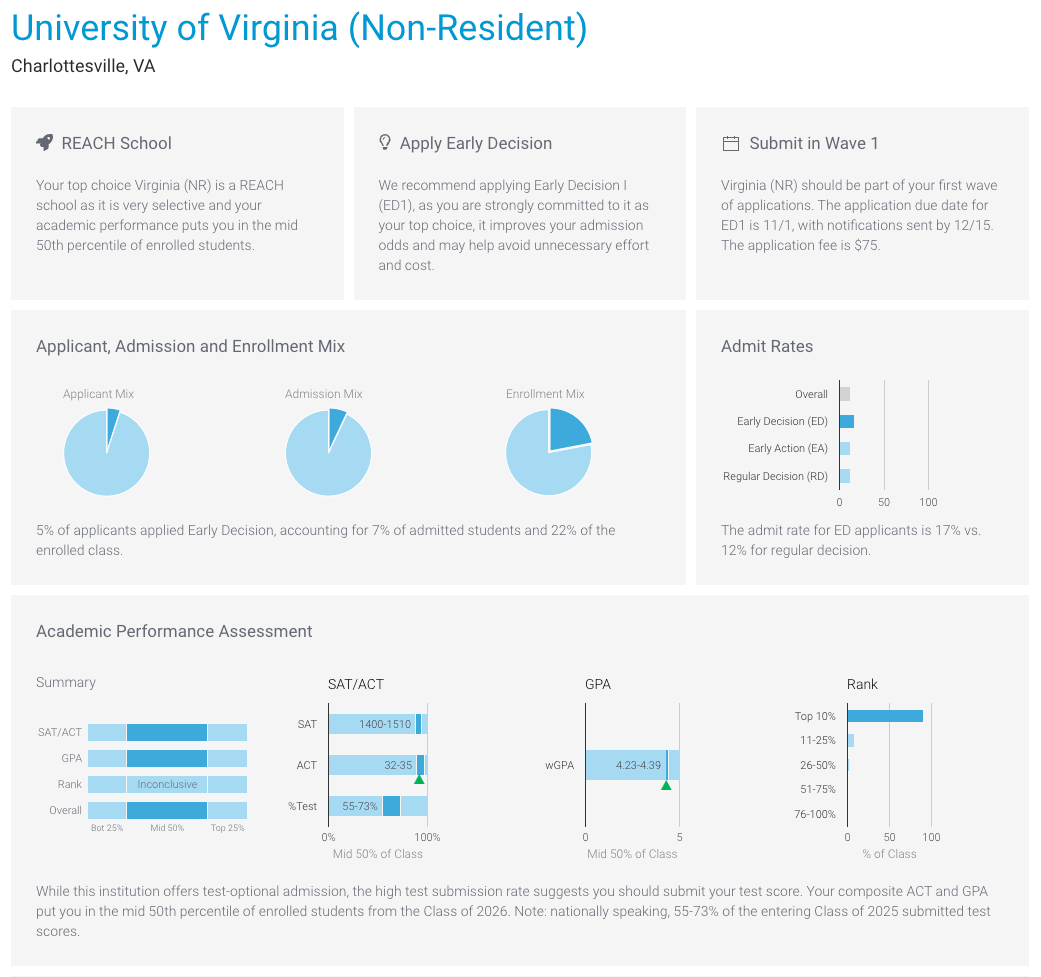
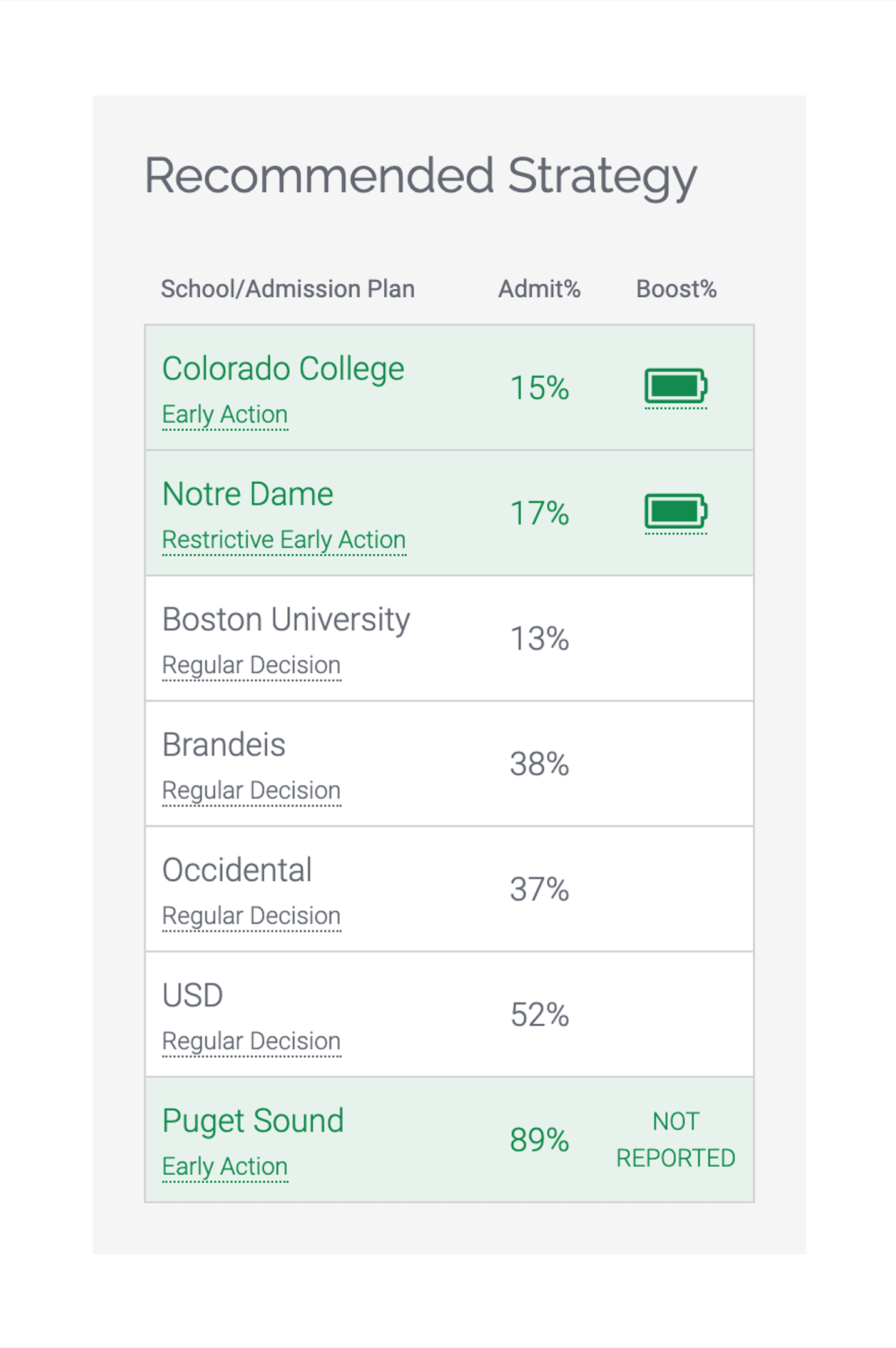
Early admission is one of the most effective and most confusing strategies available to college applicants. At many selective institutions, Early Decision acceptance rates are significantly higher than Regular Decision rates, making it one of the few levers applicants can pull to meaningfully improve their odds.
But the rules are complex. Early Decision is binding. Early Action is not. Restrictive Early Action limits where else you can apply early. And how you apply to one school can affect how you're able to apply to others.
College Kickstart demystifies the entire early admission landscape. Our recommendation engine factors in your school preferences, each institution's early admission options and restrictions, and your level of commitment, surfacing a clear strategy tailored to your specific list.
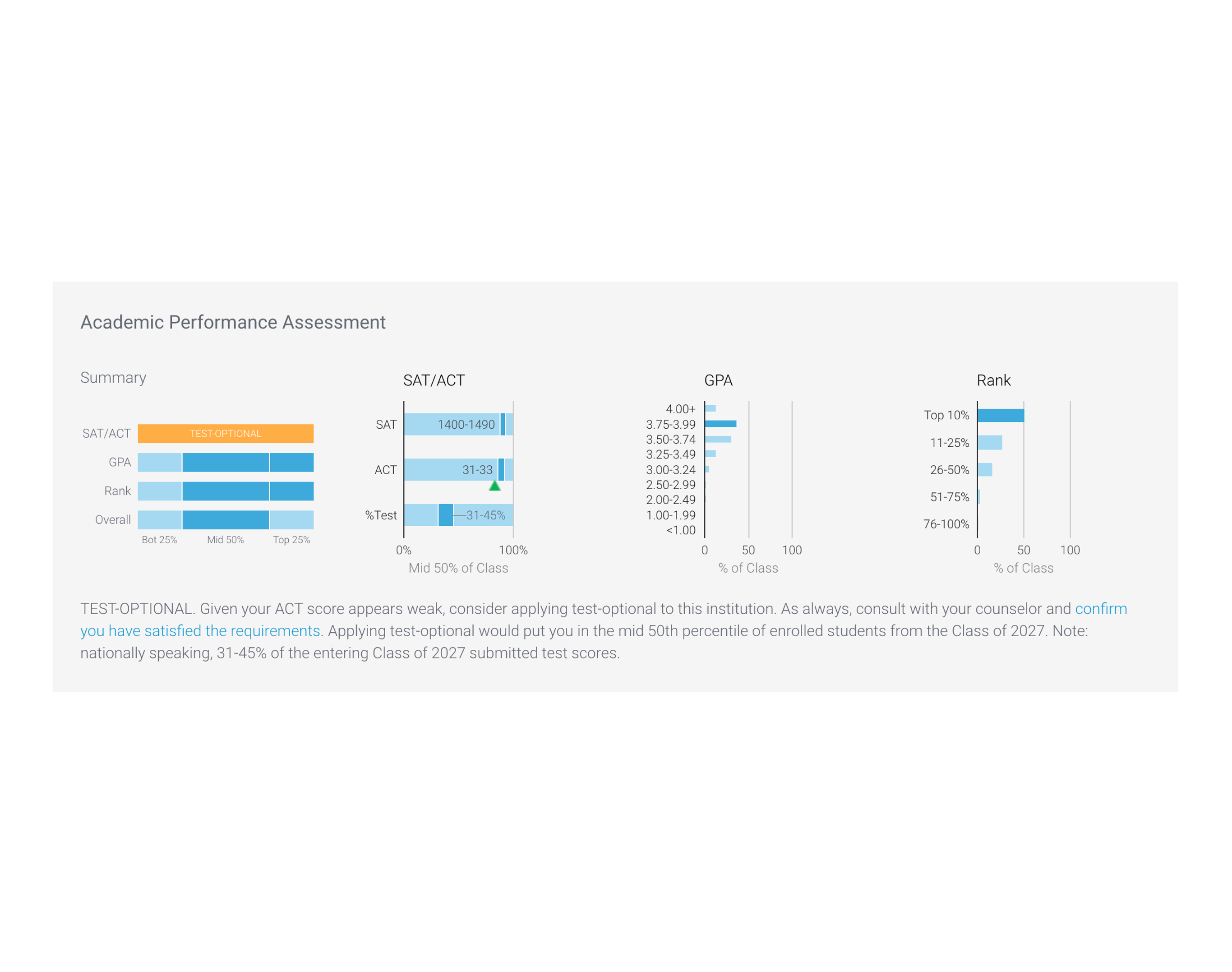
The answer depends on your scores, your target schools, and current submission trends, and it's different for every student and every school on their list.
College Kickstart analyzes each school individually and gives you a clear, data-backed recommendation on where applying test-optional makes sense for your profile.
College Kickstart grades your list based on the mix of schools you've selected and your academic competitiveness relative to each institution's admitted class. You'll see clearly where you stand and where you don't before you invest time and money in applications that aren't well-matched.
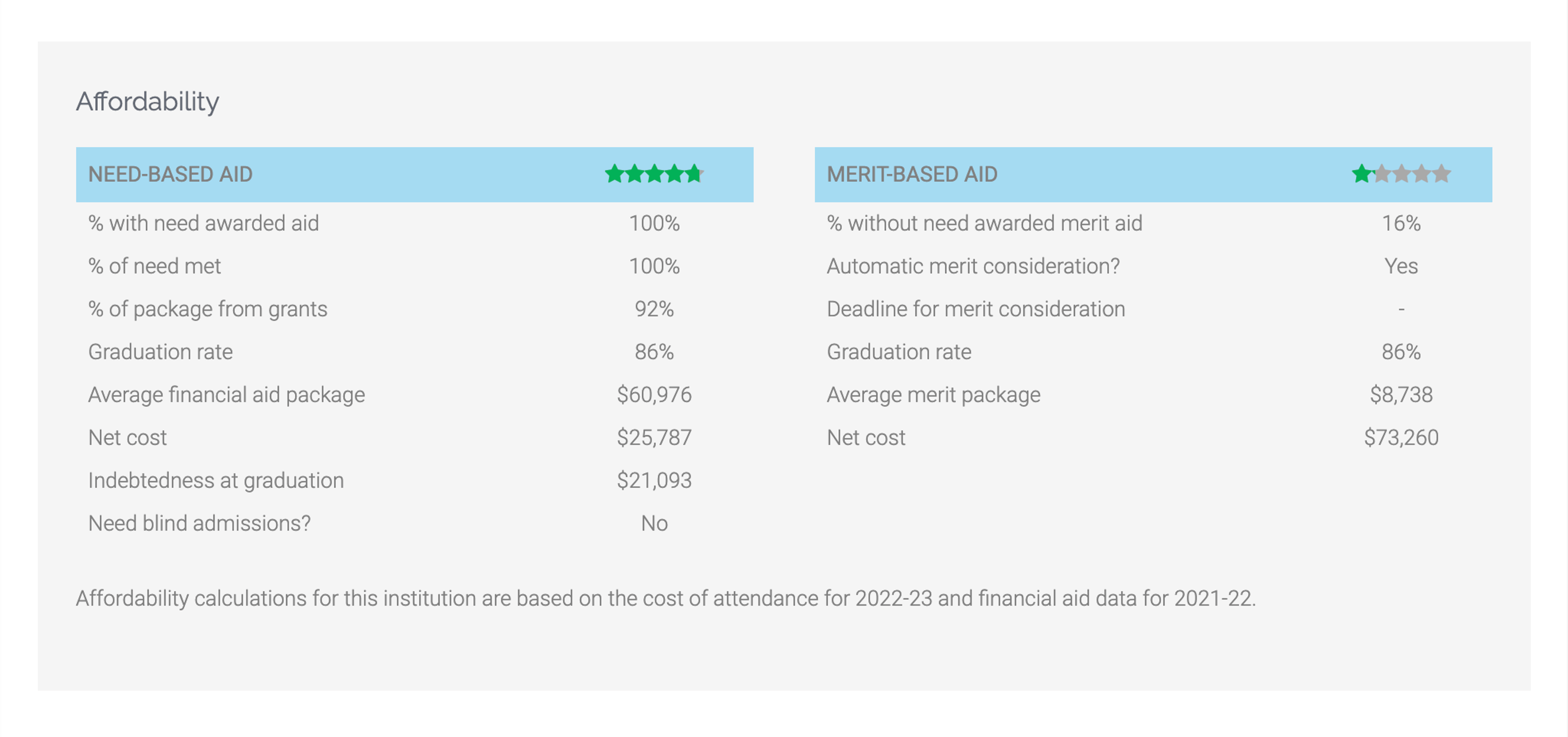
Affordability is part of the picture too. College Kickstart's proprietary ratings flag need-based and merit-based aid opportunities at every school on your list, so financial fit is built into the plan from day one — not discovered after acceptances arrive.
College Kickstart automatically builds a personalized action plan based on the deadlines and notification dates for every school on your list. Essays, recommendations, merit aid deadlines, and application requirements are tracked in one place — sequenced strategically to minimize wasted effort and unnecessary application fees.
If you're admitted through an early round, you may not need to complete those remaining applications at all.
It's really helpful to have all the statistics available and to see the probability I have to get into the colleges. The action plan was also good for helping me prioritize my essays.
A balanced list includes Likelies, Targets, Reaches, and Long Shots matched to a student's academic profile, giving them a realistic path to multiple strong acceptances.
Early Decision is binding — you must enroll if admitted. Early Action is non-binding. Restrictive Early Action limits where else you can apply early simultaneously.
At most selective institutions, yes, ED acceptance rates are meaningfully higher than Regular Decision. Use it only for a student's clear first-choice school.
Test-optional means applicants choose whether to submit scores. Submit when they strengthen your profile; apply test-optional when they fall below a school's typical range.
Most counselors recommend 10 to 15 schools, balanced across selectivity categories based on a student's academic profile and target school competitiveness.
Take a look at College Kickstart from a student's perspective, then choose the plan that fits your list.
Login: demos · Password: demos